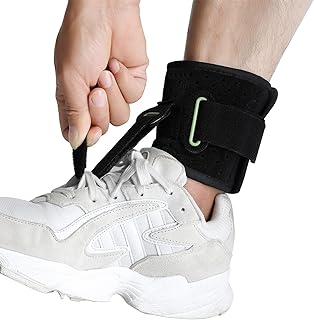
For individuals managing ankle instability, foot drop, or chronic conditions, the term AFO brace (Ankle Foot Orthosis) is often the first recommendation. These rigid or semi-rigid devices are designed to control the position and motion of the ankle, compensate for weakness, and correct deformities. However, for many active adults, teens, and even kids dealing with specific injuries like ankle sprains or peroneal tendonitis, a full AFO can feel like overkill—too bulky, too restrictive, and not suited for a return to dynamic movement. This is where understanding the spectrum of orthopedic support becomes crucial, and where a high-quality ankle brace for sprained ankle can serve as an effective and more agile alternative.
In this guide, we’ll delve into the key differences between traditional AFOs and functional ankle stabilizers. We’ll explore specific injury scenarios—from a recent lateral sprain to recurring peroneal tendonitis—and identify when a lighter, sport-specific support is the superior choice for recovery and prevention. Our focus will include an in-depth look at a popular option in this category: the Med Spec ASO Ankle Stabilizer, examining how its design principles meet the needs of those seeking robust support without the full immobilization of an AFO brace.
AFO Braces vs. Ankle Stabilizers: Understanding the Spectrum of Support
An AFO brace is primarily a medical device prescribed to address significant neurological or structural deficits. It's commonly used for conditions like foot drop (often from stroke, MS, or cerebral palsy), severe ankle arthritis, or after major surgical reconstruction. The brace typically extends from below the knee down to the foot, incorporating a solid footplate to maintain a 90-degree angle and prevent the foot from slapping down during gait.
In contrast, an ankle stabilizer like the Med Spec ASO is engineered for sports injury recovery and mechanical instability. Its goal isn't to replace muscle function but to protect and reinforce the ankle's existing ligaments and tendons. It's designed for conditions where the ankle's structural integrity is compromised but where a range of motion is still desired for rehabilitation and activity. This makes it an excellent AFO brace alternative for active individuals with conditions such as:
- Grade I, II, and III ankle sprains (during later-stage rehab)
- Chronic ankle instability (CAI)
- Peroneal tendonitis or tendonosis
- Prevention of re-injury during sports
- Post-cast immobilization for a smoother transition to full activity
The key distinction lies in the level of control versus freedom. An AFO controls dorsiflexion and plantarflexion. A stabilizer primarily restricts inversion and eversion—the rolling motions that cause sprains—while allowing more natural up-and-down movement essential for walking, running, and jumping.
When is an Ankle Stabilizer the Right Choice? Key Injury Scenarios
1. Ankle Sprains: From Acute Injury to Chronic Instability
The most common application for a stabilizer is an ankle sprain. In the acute phase (first 1-5 days), R.I.C.E. (Rest, Ice, Compression, Elevation) and possibly a rigid boot are standard. However, as swelling decreases and healing begins, early protected motion is beneficial. A stabilizer like the Med Spec ASO provides the lateral and medial support needed to prevent re-injury during this vulnerable phase, making it a cornerstone of sports injury recovery. For those with a history of sprains leading to chronic looseness in the ligaments, wearing a stabilizer during high-risk activities can be a game-changer for prevention.
2. Peroneal Tendonitis: Supporting the Stabilizing Muscles
Peroneal tendonitis involves inflammation of the tendons that run behind the outer ankle bone. These tendons are critical for preventing the ankle from rolling inward. When they are overloaded or inflamed, the ankle becomes more susceptible to sprains. A dedicated peroneal tendonitis brace is designed to offload stress from these tendons. The Med Spec ASO, with its figure-eight strap design, compresses and supports this exact anatomical area, reducing strain and allowing the tendons to heal while maintaining activity levels more than a rigid AFO would permit.
3. The Active Lifestyle: Prevention and Performance
Athletes in basketball, volleyball, soccer, and trail running are at high risk for ankle injuries. Many proactively use ankle stabilizers not because they have a current injury, but to prevent one. The stabilizer acts as an external ligament, providing sensory feedback (proprioception) and mechanical blockage against extreme, injurious angles. This preventative approach is a smart strategy for anyone with a "weak" or previously injured ankle who wants to stay in the game with confidence.
Deep Dive: The Med Spec ASO Ankle Stabilizer as a Functional Alternative
Let's examine why a product like the Med Spec ASO Ankle Stabilizer stands out as a premier choice for those seeking an AFO brace alternative. Its design is the result of decades of orthopedic bracing science applied to sports medicine.
Biomechanical Design: The core of the ASO is its patented non-elastic stabilizing straps. These are applied in a specific sequence: the first strap secures the heel, the second forms a figure-eight around the foot and ankle, and the third provides a lateral stirrup. This multi-strap system mimics the natural course of the ankle's lateral ligaments, providing targeted support exactly where it's needed to prevent inversion sprains. This is a more sophisticated approach than a simple sleeve or elastic wrap.
Material and Fit: Made from a combination of durable nylon, neoprene, and hook-and-loop closures, it offers a secure, customizable fit for men, women, and kids. The neoprene sleeve provides compression, warmth, and proprioceptive feedback, while the external straps deliver the primary mechanical stabilization. This layered approach allows it to function as both a sprained ankle brace and a tendonitis support.
Activity Compatibility: Unlike a rigid AFO brace, the ASO is low-profile enough to fit inside most athletic shoes. This means it can be worn during rehabilitation exercises, practice, and even competition for many sports. Its design supports a return to normal gait and athletic movement patterns, which is essential for true functional recovery.
Making the Decision: How to Choose Between an AFO and a Stabilizer
This decision should always be made in consultation with a healthcare professional, such as an orthopedic doctor, physiatrist, or physical therapist. However, you can guide the conversation with this framework:
- Choose a traditional AFO brace if: You have a neurological condition causing foot drop, require complete immobilization of the ankle in a specific position, or have a severe structural deformity that needs correction.
- Choose an ankle stabilizer like the Med Spec ASO if: You have mechanical instability from ligaments or tendons, are in the rehabilitation phase of a sprain or strain, need support for athletic performance and prevention, or find a full AFO too restrictive for your daily or athletic activities.
For many people on the boundary—such as someone with moderate chronic instability who is very active—the stabilizer offers the perfect balance of protection and freedom. It serves as a practical orthopedic ankle support system that integrates into an active lifestyle.
Integrating an Ankle Stabilizer into Your Recovery Protocol
Simply wearing a brace is not a cure. It should be part of a comprehensive plan:
- Professional Diagnosis: Get a clear diagnosis of your injury (e.g., which ligament is sprained, grade of sprain).
- Early Rehabilitation: Work with a physical therapist on restoring range of motion, strength (especially the peroneals and calf muscles), and balance/proprioception.
- Brace as a Tool: Use the stabilizer as a protective tool during rehab exercises and as you gradually return to weight-bearing activities and sport.
- Weaning Off: As your strength and proprioception improve, gradually decrease reliance on the brace during low-risk activities, continuing to use it for high-risk or high-intensity sessions as needed for confidence and safety.
The Med Spec ASO Ankle Stabilizer excels in this protocol because it allows for the movement necessary to perform these rehab exercises effectively, unlike a more restrictive device.
Conclusion: Empowering Your Mobility with the Right Support
The world of orthopedic ankle support is not one-size-fits-all. While the AFO brace remains a vital tool for specific neurological and severe orthopedic conditions, functional ankle stabilizers have carved out an essential niche for the injury-related and active population. Products like the Med Spec ASO Ankle Stabilizer provide a scientifically-backed, athlete-tested solution for sprains, tendonitis, and instability.
By offering targeted ligament support without sacrificing essential motion, they facilitate a more natural and effective recovery pathway. Whether you're a weekend warrior, a competitive athlete, a teen navigating sports, or an adult managing chronic instability, understanding this alternative empowers you to make informed decisions about your sports injury recovery and long-term joint health. Always consult your medical provider to ensure the chosen support aligns with your specific diagnosis, but know that for mechanical ankle issues, a high-quality stabilizer is often the perfect bridge between injury and a full, confident return to activity.