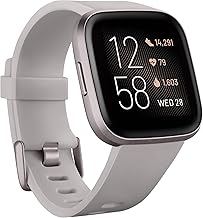
Choosing the right fitness smartwatch can be a game-changer for your health journey, but with so many models available, the decision isn't always easy. If you're a Fitbit enthusiast, you've likely considered both the newer Versa 4 and its popular predecessor, the Fitbit Versa 2. While the Versa 2 remains a solid and affordable option, the Versa 4 introduces significant upgrades aimed at the dedicated fitness user. This comprehensive guide will break down the key differences in design, features, and performance to help you decide which watch aligns with your lifestyle and fitness ambitions.
Design & Build: Evolution of a Classic
At first glance, both watches share the iconic Versa square-ish design with a vibrant AMOLED touchscreen. The Versa 4, however, feels more refined. It features a sleeker aluminum case and a new one-button navigation system on the left side, moving away from the Versa 2's indented button. This gives it a more modern, streamlined look. Both models are swim-proof and come with interchangeable bands, but the Versa 4's band attachment mechanism is slightly more robust. If you prioritize a contemporary aesthetic and a more secure feel, the Versa 4 has the edge. For those who love the classic Versa look and a lower profile, the Versa 2 still holds up well.
Core Fitness & Health Tracking: A Major Leap Forward
This is where the fitness smartwatch capabilities truly diverge. The Versa 4 is built for a more connected, data-driven workout experience.
Built-in GPS: Freedom to Explore
The most significant upgrade is the inclusion of built-in GPS in the Versa 4. This means you can leave your phone behind for runs, hikes, or bike rides and still get accurate maps of your route, along with real-time pace and distance data. The Versa 2 lacks this hardware, requiring a connected GPS signal from your smartphone, which can be less reliable and convenient. For any outdoor athlete, the Versa 4's GPS fitness tracker functionality is a transformative feature.
Daily Readiness Score: Your Personal Fitness Coach
Exclusive to the Versa 4 is the Daily Readiness Score. This feature, found in the Fitbit Premium app, analyzes your 24/7 heart rate variability, sleep data, and activity levels to tell you if your body is primed for a tough workout or needs recovery. It's an advanced metric that helps prevent overtraining. The Versa 2 provides the raw data (heart rate, sleep stages) but doesn't synthesize it into this actionable, holistic score.
Exercise Modes & Active Zone Minutes
The Versa 4 boasts over 40 exercise modes, including new ones like hiking, gym equipment workouts (treadmill, elliptical), and even a dedicated tennis mode. It also uses your heart rate zones to track Active Zone Minutes, a more personalized metric than simple step counting. The Versa 2 tracks around 20+ exercise modes and uses Active Minutes. For those who engage in varied workouts, the Versa 4's expanded exercise modes offer better specificity.
Sleep & Recovery: Deeper Insights
Both watches are excellent sleep tracking devices, providing Sleep Score, sleep stages (light, deep, REM), and a detailed sleep timeline. The Versa 4, however, integrates this data more powerfully with the aforementioned Daily Readiness Score. Furthermore, the Versa 4's heart rate sensor is more advanced, potentially offering slightly more precise data for both 24/7 heart rate monitoring and sleep stage detection. If sleep optimization is a top priority, the Versa 4 provides a more complete picture of how your sleep impacts your daily readiness.
Battery Life & Smart Features
Battery life is a strong suit for both. The Versa 4 offers up to 6+ days, while the Versa 2 can stretch to about 5-6 days, depending on usage. The Versa 4's GPS use will drain the battery faster on workout days. On the smart features front, both have voice assistants (Google Assistant on Versa 4, Amazon Alexa on Versa 2), NFC for Fitbit Pay, and receive smartphone notifications. The Versa 4 runs on a newer version of Fitbit OS, which feels snappier, but the core smart experience is similar. For pure longevity, both are excellent, making them reliable activity tracker companions.
Who Should Choose the Fitbit Versa 4?
The Versa 4 is the clear choice for fitness-focused individuals who:
- Participate in regular outdoor running, cycling, or hiking and need built-in GPS.
- Want advanced metrics like the Daily Readiness Score to optimize training and recovery.
- Engage in a wide variety of sports and need specific exercise tracking modes.
- Value having the latest sensors and a more modern design.
It's a comprehensive fitness smartwatch designed for those who take their training data seriously.
Who is the Fitbit Versa 2 Still Perfect For?
The Fitbit Versa 2 remains a compelling and value-packed option, especially if you can find it at a discounted or renewed price. It's ideal for users who:
- Primarily want a superb all-day activity tracker and sleep monitor.
- Usually carry their phone during workouts and don't require built-in GPS.
- Are satisfied with core health metrics like steps, heart rate, and sleep stages without needing a daily readiness score.
- Prioritize affordability while still getting a great AMOLED display and solid smart features.
Final Verdict: Evolution Meets Value
The decision between the Fitbit Versa 4 and Versa 2 ultimately comes down to your fitness philosophy and budget. The Versa 4 represents a significant evolution, packing dedicated GPS, advanced workout features, and holistic health insights like Daily Readiness into a sleek package. It's built for the user who views their smartwatch as an essential training tool. The Fitbit Versa 2, on the other hand, continues to offer tremendous value. It delivers the core Fitbit experience—reliable activity and sleep tracking in a stylish design—at a more accessible price point. For the casual to moderate fitness enthusiast, it remains a fantastic choice. Assess your need for GPS independence and advanced training metrics; your answer will lead you to the perfect Fitbit for your wrist.