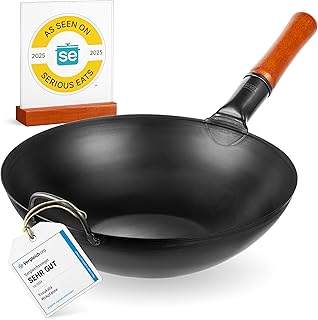
In the quest for restaurant-quality meals at home, many home cooks invest in high-end knives, specialty ingredients, and powerful blenders. Yet, they often overlook the single most transformative piece of cookware: the carbon steel wok. This isn't just another pan; it's a culinary engine, a tool that has been perfected over centuries in Asian kitchens for its unparalleled ability to conduct heat, create flavor, and handle virtually any cooking task. If you've ever wondered why your stir-fry never quite tastes like it came from your favorite takeout spot, the answer likely lies in your cookware.
This article dives deep into the 'why' behind the carbon steel wok's legendary status. We'll explore the science of its performance, debunk common myths, and explain why choosing the right one—like a pre-seasoned model from YOSUKATA—can be a game-changer for your kitchen, whether you're mastering a classic stir-fry, searing a steak, or even cooking over a campfire.
The Unbeatable Material: Why Carbon Steel Wins
To understand the magic of a carbon steel wok, you must first understand its material. Carbon steel is an alloy of iron and carbon, typically containing less than 2% carbon. This composition gives it a unique set of properties that make it ideal for high-heat cooking.
First is heat conductivity and retention. Carbon steel heats up quickly and evenly, responding instantly to changes in your stove's flame. Unlike stainless steel, which can have hot spots, a well-made carbon steel wok distributes heat uniformly across its surface. This rapid, even heating is the foundation of the 'wok hei' or 'breath of the wok'—that elusive, smoky, charred flavor characteristic of great stir-fry. When food hits the surface, it sears immediately, locking in juices and creating complex caramelization.
Second is its incredible durability and lightness. Cast iron is famous for heat retention but is prohibitively heavy, especially for the tossing and flipping motions required in wok cooking. A carbon steel wok offers similar performance to cast iron but at a fraction of the weight. It's tough enough to withstand metal utensils, high BTU burners, and even open flames, yet light enough for one-handed maneuvering.
The Secret of the Seasoning: Your Non-Stick, Flavor-Enhancing Patina
The most common apprehension about carbon steel is the concept of 'seasoning.' Many believe it's a difficult, high-maintenance process. In reality, seasoning is simply the polymerization of oil on the metal's surface, creating a natural, non-stick, and protective patina. This isn't a coating that can chip or flake like Teflon; it's a chemical bond that improves with use.
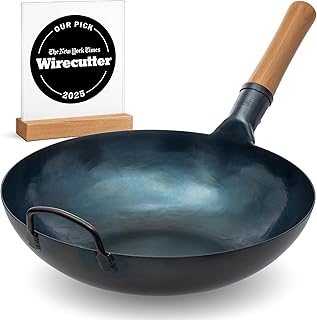
A pre-seasoned wok, such as the YOSUKATA model, comes with this initial layer already applied. This is a massive advantage for beginners, as it allows you to start cooking with a functional non-stick surface right out of the box. Over time, as you cook with fats and oils, this seasoning layer will darken, strengthen, and become even more non-stick. Each meal you prepare adds to its character and performance, making the wok truly your own.
This natural patina does more than prevent sticking. It also becomes a flavor reservoir. Microscopic bits of previous meals contribute to a subtle depth of flavor in future dishes, a phenomenon cherished by professional chefs. Caring for this seasoning is simple: hand-wash with minimal soap, dry thoroughly, and apply a thin coat of oil after use. This small ritual ensures your wok lasts a lifetime.
Round Bottom vs. Flat Bottom: Choosing Your Champion
The classic design is the round bottom wok, engineered for traditional wok cooking over a concentrated flame. The curved shape creates distinct heat zones: a searing-hot bottom for quick cooking and cooler sides for gently moving ingredients. This design is ideal for gas stoves and, as the YOSUKATA product highlights, for camping cookware over an open fire.
For home cooks with electric coil, glass-top, or induction ranges, a flat-bottomed wok is necessary to ensure stable contact with the heating element. While it slightly alters the traditional heat dynamics, a high-quality carbon steel flat-bottom wok still outperforms standard frying pans for stir-frying. The key takeaway is to match the wok's base to your heat source. The versatility of a round-bottom model like the YOSUKATA truly shines on a powerful gas burner, which is why it's specified as 'compatible with gas stoves & open fire only.'
Beyond Stir-Fry: The Astonishing Versatility of a Carbon Steel Wok
Labeling this tool solely as a stir-fry wok is a severe understatement. Its shape and material make it the most versatile pan in your kitchen.
- Deep Frying: The wide top and tapered bottom use oil efficiently, providing ample space for food to fry without overcrowding, resulting in crispier results.
- Steaming: Add a bamboo steamer basket, and you have a perfect vessel for steaming dumplings, fish, and vegetables.
- Smoking & Braising: Its high walls are ideal for techniques that require a lid and slow cooking with liquids.
- Searing & Sautéing: It performs beautifully as a general sauté pan or for getting a perfect crust on proteins.
- One-Pan Meals: From paella to noodle dishes, its capacity and even heating are ideal for complex, single-vessel recipes.
This versatility stems from its heritage as the central workhorse in both Japanese and Chinese cookware traditions, designed to do everything in a compact kitchen.
Why the YOSUKATA 14" Round Bottom Wok is a Strategic Choice
When selecting your first (or next) carbon steel wok, the YOSUKATA 14" model exemplifies the principles discussed. Its 14-inch diameter is a versatile size for most home kitchens, large enough to cook for a family but manageable on a standard burner. The blue pre-seasoning is not just aesthetic; it indicates a factory-applied, ready-to-cook surface that eliminates the initial seasoning hurdle.
Being a dedicated round-bottom wok, it is unapologetically designed for performance on the right heat source. This focus means it will deliver authentic results for those with a gas stove or who enjoy outdoor cooking. Choosing a tool designed for a specific, optimal use case often yields better results than a compromised 'one-size-fits-all' product. It represents a commitment to authentic technique.
Conclusion: The Ultimate Kitchen Upgrade
A carbon steel wok is more than a pan; it's an investment in a cooking method. It rewards active cooking, high heat, and proper care with flavor and performance that non-stick or stainless steel simply cannot match. The learning curve is minimal, especially with a pre-seasoned option, and the payoff is immense: faster cooking, more flavorful food, and a single tool that can replace several others in your cabinet.
If you're ready to unlock the secret to better stir-fries, more versatile weeknight meals, and a deeper connection to your cooking, the path forward is clear. Embrace the time-tested design and material. Consider starting your journey with a purpose-built, pre-seasoned wok like the YOSUKATA, and discover for yourself why this piece of traditional cookware remains utterly indispensable in the modern kitchen.