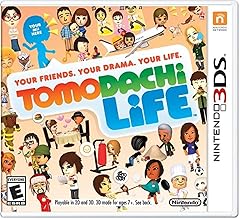
In the vast library of Nintendo 3DS titles, few games have captured the imagination and generated as many bizarre, player-driven stories as Tomodachi Life. Released by Nintendo, this isn't your typical life simulator. It's a vibrant, unpredictable sandbox where your Mii characters—based on friends, family, celebrities, or pure imagination—live, love, feud, and sing bizarre operas about food. This deep dive explores the magic, mechanics, and enduring legacy of this unique social simulation experience.
What is Tomodachi Life? The Core Concept
At its heart, Tomodachi Life is a life simulation game where you populate a small island apartment building with Miis. Your role is less of a dictator and more of a benevolent observer and occasional problem-solver. You don't directly control their actions. Instead, you provide them with clothes, food, and interior items, then watch as their unique personalities, dictated by traits you assign, interact in wonderfully strange ways. The game's genius lies in its emergent storytelling. Two Miis might become best friends, start dating, get married, and have a baby—or they might have a massive argument over a sandwich, requiring your mediation. This focus on autonomous, quirky social dynamics sets it apart from more structured sims.
Building Your Island: Gameplay Mechanics and Secrets
The daily loop of Tomodachi Life is deceptively simple yet endlessly engaging. You check in on your islanders, fulfill their requests for specific items (often leading to humorous scenes), and solve their interpersonal problems. A key to long-term enjoyment is understanding the depth beneath the surface.
- Personality & Compatibility: Each Mii has a personality type (outgoing, easygoing, etc.) and interests. Compatible Miis are more likely to become friends or romantic partners. Experimenting with different combinations is half the fun.
- The Looksnap & Concert Hall: These mini-games and features are not just diversions. Satisfying a Mii's request to be photographed in a specific outfit or helping them rehearse a song directly impacts their happiness and can unlock new items and interactions.
- Random Events: The true heart of the game. Miis will have dreams you can influence, get into absurd situations, and invent new "fashion" trends. No two playthroughs are ever the same, making every save file a unique story.
For players looking to start their own island saga, the specific cartridge Nintendo 3DS Tomodachi Life by Nintendo provides the complete, authentic experience. Ensuring you have the official game is the first step to accessing all its quirky content.
The Mii: More Than Just an Avatar
In most Nintendo games, Miis are simple player representatives. In Tomodachi Life, they become full-fledged characters. The game's sophisticated text-to-speech engine gives them unique, often hilariously off-key voices. You assign them catchphrases and favorite foods. Watching a Mii you created based on a stoic historical figure break into a pop song about pancakes is a uniquely quirky gameplay moment that only this title delivers. This transformation of the generic Mii into a complex, sometimes frustrating, always entertaining island resident is a core pillar of the game's charm.
Why Tomodachi Life Became a Cult Classic and Nintendo Bestseller
Upon its release, Tomodachi Life quickly cemented its status as a Nintendo bestseller. Its success wasn't just about sales figures; it was about cultural impact. The game spawned a massive online community where players shared screenshots and stories of their islands' happenings. Social media was flooded with tales of unlikely weddings, bizarre dreams, and rap battles between Miis of politicians. This player-driven content creation demonstrated the game's powerful emergent narrative engine. It proved that a handheld game could offer a deeply personal and shareable experience, blurring the line between game, digital toy, and story generator.
Tomodachi Life's Legacy and Place in the Life Sim Genre
While the Nintendo 3DS eShop has closed, the legacy of Tomodachi Life endures. It showed that life simulation could be wildly humorous and personality-driven, rather than purely aspirational or resource-management focused. Its influence can be seen in later Nintendo titles that gave Miis more character, like Miitopia. For many, it represents the pinnacle of quirky, casual simulation on a handheld device. The stories it creates are personal, memorable, and often laugh-out-loud funny, a testament to its brilliant design.
Final Thoughts: Is Tomodachi Life Still Worth Experiencing?
For fans of simulation, storytelling, and Nintendo's signature charm, Tomodachi Life remains an essential play. It's a time capsule of a specific era of Nintendo creativity and a testament to the power of simple systems creating complex stories. Whether you're curating a collection of classic life simulation games or seeking a uniquely cheerful and absurd experience, populating an island with your Miis offers a delightful escape. The apartment building awaits your cast of characters—ready to live, love, and sing about turnips.