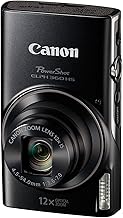
In the ever-evolving world of digital photography, where smartphones dominate casual shooting, dedicated compact cameras like the Canon PowerShot ELPH 360 hold a special place. Released as part of Canon's long-running ELPH (known as IXUS in some regions) series, this model promised a blend of style, simplicity, and capable optics in a pocketable form. But in today's market, is it still a relevant choice for photographers or a nostalgic piece of tech? This comprehensive review dives deep into the ELPH 360's features, performance, and value proposition to help you decide.
Unboxing the Canon PowerShot ELPH 360: Design and First Impressions
The Canon PowerShot ELPH 360 immediately impresses with its sleek, metallic body—a hallmark of the ELPH line. It's remarkably thin and light, making it the perfect companion for travel or everyday carry. The build quality feels solid, with a smooth finish that resists fingerprints reasonably well. Controls are minimalist and intuitive, featuring a mode dial, playback button, and a circular multi-controller for menu navigation. The 3.0-inch LCD screen, while not a touchscreen, is bright and clear for composing shots and reviewing images. Holding it, you appreciate its purpose: a no-fuss, point-and-shoot camera designed for ease of use.
Core Features and Specifications: What Does the ELPH 360 Offer?
Under the hood, the Canon PowerShot ELPH 360 packs a set of features typical of its era and segment. Let's break down the key specs:
- Sensor: A 20.2-megapixel 1/2.3-inch CCD sensor. This was a common resolution for compact cameras, aiming to provide detail for prints and cropping.
- Lens: The star of the show is the 12x optical zoom lens, with a focal range of 25-300mm (35mm equivalent). This versatile range covers wide-angle landscapes to significant telephoto shots, a major advantage over most smartphone cameras of its time and even many today.
- Image Stabilization: Canon's Optical Image Stabilizer helps counteract camera shake, especially useful at the long end of the zoom or in lower light.
- Video: It records 720p HD video, which was standard but is now surpassed by 1080p and 4K capabilities in newer models.
- Shooting Modes: Features Auto, Program, and several Scene Modes (Portrait, Landscape, etc.), along with Creative Filters for adding effects in-camera.
- Connectivity: Built-in Wi-Fi and NFC allow for easy wireless transfer of photos to smartphones, tablets, or computers—a crucial feature for modern sharing.
Image Quality Assessment: How Does It Perform?
Daylight and Good Lighting
In ample light, the Canon PowerShot ELPH 360 delivers pleasing results. Colors are typically vibrant and true-to-life, a signature of Canon's image processing. The 20MP sensor captures a good level of detail for social media, small prints, and online viewing. The 12x zoom is incredibly practical, allowing you to frame shots creatively without moving. However, as with most small-sensor cameras, fine detail can start to look processed when pixel-peeping, and dynamic range (the ability to capture detail in both shadows and highlights) is limited compared to larger-sensor cameras.
Low-Light Performance
This is where the limitations of the small CCD sensor become apparent. The camera struggles in low light, with images showing noticeable noise (grain) even at moderate ISO settings (like ISO 400-800). The lack of a fast lens (maximum aperture is f/3.6 at the wide end) means it doesn't gather as much light. While the image stabilizer helps with handheld blur, you'll often need to use the flash or accept noisier images in dim environments. For well-lit indoor events or nightscapes with good ambient light, it can manage, but it's not a low-light champion.
Zoom Performance and Macro
The 12x zoom is the ELPH 360's killer feature. The optical quality is decent throughout the range, with some expected softness at the extreme telephoto end. It's perfect for travel, wildlife from a distance, or candid portraits. The macro mode allows for close-up shots, letting you capture details of flowers, insects, or small objects with a pleasing background blur.
Pros and Cons: The Honest Verdict
Advantages of the Canon PowerShot ELPH 360
- Superb Portability: Its slim design is unmatched for convenience.
- Powerful 12x Optical Zoom: Offers flexibility most smartphones lack.
- User-Friendly Operation: Perfect for beginners or those who want a simple shooting experience.
- Built-in Wi-Fi/NFC: Enables easy sharing and remote shooting via smartphone app.
- Good Daylight Image Quality: Produces vibrant, share-ready photos in good light.
Limitations and Considerations
- Poor Low-Light Performance: Noisy images in dim conditions.
- Aged Video Capability: 720p video feels outdated.
- Fixed LCD Screen: No touchscreen, articulating screen, or viewfinder.
- Battery Life: Moderate; carrying a spare is advisable for full-day outings.
- Small Sensor Limitations: Cannot match the image quality of larger-sensor cameras (DSLRs, mirrorless, or even 1-inch sensor compacts).
Canon PowerShot ELPH 360 vs. Modern Smartphones
This is the most critical comparison. Modern smartphones excel in computational photography—HDR, night mode, and portrait mode—often producing more consistently pleasing JPEGs in auto mode, especially in low light. They are also always with you. However, the ELPH 360 retains key advantages: true optical zoom (not digital crop), a dedicated physical shutter button for better control, and arguably a more focused photography experience without the distractions of a phone. For someone who values zoom versatility above all in a tiny package, the ELPH 360 still has a role.
Who Should Buy the Canon PowerShot ELPH 360 Today?
The Canon PowerShot ELPH 360 is not for everyone, but it can be perfect for specific users:
- The Casual Traveler: Who wants a lightweight, dedicated camera with a great zoom for landscapes and distant subjects without the bulk of an interchangeable-lens system.
- Beginners & Kids: Its simplicity makes it an excellent tool for learning photography basics beyond a smartphone.
- Secondary Camera Users: As a pocketable backup to a primary DSLR or mirrorless camera for situations where carrying a big kit is impractical.
- Budget-Conscious Buyers: If found at a significant discount on the secondary market, it represents substantial value for its zoom range and portability.
Final Conclusion: Is It Still Worth It?
The Canon PowerShot ELPH 360 is a capable and charming compact camera that excels in portability and zoom versatility. Its image quality in good light is more than sufficient for everyday memories and online sharing. However, its age shows in low-light performance and video resolution. Your decision hinges on priorities. If your main camera is a smartphone and you crave a much longer, true optical zoom in a device that fits in your pocket, the ELPH 360 remains a compelling, purpose-driven option. If low-light performance, cutting-edge video, or the ultimate in image quality are your goals, you may want to look at newer cameras with larger sensors. Ultimately, the ELPH 360 stands as a testament to the classic point-and-shoot—a simple, focused tool that does a specific job very well.