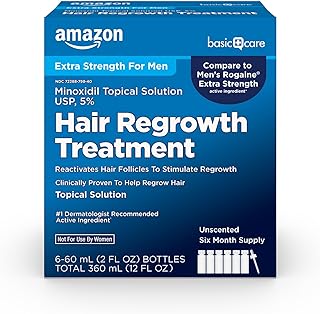
Hair loss is a common concern affecting millions worldwide, driving a constant search for effective solutions. Among the myriad of products available, Minoxigaine has emerged as a notable name. This topical treatment, often associated with the active ingredient minoxidil, promises to combat thinning hair and promote regrowth. But does it live up to the hype? This in-depth review will analyze Minoxigaine from every angle, drawing on scientific principles, user testimonials, and comparative analysis to help you determine if it's the right choice for your hair restoration journey.
Understanding the mechanism behind hair loss treatments is crucial. Most topical solutions, including those under the Minoxigaine umbrella, typically work by prolonging the anagen (growth) phase of the hair follicle and increasing blood flow to the scalp. This process can revitalize shrunken follicles, leading to thicker, longer hair strands. It's important to set realistic expectations; these products are generally more effective for individuals in the early to moderate stages of pattern hair loss (androgenetic alopecia).
When evaluating any hair growth product, the formulation is key. A standard Minoxigaine solution usually contains minoxidil as its primary active component, often at concentrations of 2% or 5%. The higher concentration is typically recommended for men, while women may start with the lower dose. Beyond minoxidil, the efficacy and user experience are heavily influenced by the vehicle—the solution that carries the active ingredient. Some advanced formulations may include additional supportive ingredients like azelaic acid, retinol, or natural extracts like saw palmetto, which may help enhance absorption or provide complementary anti-androgenic effects.
Effectiveness and Clinical Backing
The cornerstone of Minoxigaine's claim to fame is minoxidil, one of the only two FDA-approved drugs for treating pattern hair loss (the other being finasteride). Decades of clinical studies have established its efficacy. Regular application over a period of 4-6 months can lead to visible results for a significant percentage of users, including a reduction in hair shedding and the stimulation of new growth, often appearing as fine, vellus hairs initially that may thicken over time.
However, results are not universal. Genetic factors, the extent of hair loss, consistency of application, and the underlying cause all play a role. It's also critical to understand that minoxidil is a treatment, not a cure. Discontinuation usually leads to a reversal of benefits, with hair loss progressing again. Therefore, commitment to long-term use is a necessary consideration for anyone starting this therapy.
User Experience and Application
Practicality is a major factor in the success of any daily treatment. Applying Minoxigaine is generally straightforward: it involves applying 1mL of solution directly to the dry scalp in the affected areas twice daily. Common feedback from users highlights several points. The initial weeks can sometimes trigger a "dread shed," where increased hair fall occurs as resting follicles are pushed into the shedding phase to make way for new growth. This, while disconcerting, is often a sign the treatment is working.
Potential side effects are usually mild and localized. The most frequently reported is scalp irritation, which can include itching, redness, or flaking. This is often due to the alcohol base in the solution, which can be drying. Some users also report unwanted facial hair growth if the solution drips onto the forehead or cheeks. Choosing a formulation with a gentler vehicle or using the foam version (if available for the specific Minoxigaine product) can mitigate these issues for sensitive individuals.
Minoxigaine vs. Alternative Hair Loss Treatments
How does a product like Minoxigaine stack up against other options? Compared to oral medications like finasteride, it offers a topical, non-systemic approach, which is a significant advantage for individuals concerned about internal side effects. Against natural remedies and shampoos, minoxidil-based treatments like Minoxigaine generally have a stronger and more predictable evidence base for stimulating new growth.
For more advanced hair loss, it may be used in conjunction with other therapies. For instance, combining topical minoxidil with low-level laser therapy (LLLT) caps or microneedling sessions has shown promising synergistic effects in studies, potentially enhancing follicular uptake and response. It's also a common supportive treatment before and after hair transplant procedures to maximize the survival of transplanted grafts and protect the existing native hair.
Who Should Consider Using Minoxigaine?
This treatment is best suited for men and women experiencing hereditary hair loss at the crown (vertex) and middle of the scalp. It tends to be less effective on receding hairlines (frontal baldness). Ideal candidates are those who are patient, as results take months to manifest, and committed to a consistent, long-term routine. It is less likely to be effective for hair loss caused entirely by autoimmune conditions, nutritional deficiencies, or severe stress, where addressing the root cause is paramount.
Before starting, a consultation with a dermatologist or trichologist is highly recommended. They can confirm the diagnosis of androgenetic alopecia, rule out other conditions, and provide guidance on the appropriate concentration and formulation, ensuring you embark on the most targeted path for your specific situation.
Final Verdict and Recommendations
Minoxigaine, as a minoxidil-based treatment, represents a proven, first-line defense against pattern hair loss. Its strengths lie in its clinical validation, non-invasive application, and accessibility. For individuals new to hair loss treatments, it is often a logical and effective starting point.
To maximize success, follow these tips: be impeccably consistent with applications, ensure the solution reaches your scalp and not just your hair, manage expectations (full results can take up to a year), and monitor your scalp's health. If irritation persists, discuss alternative formulations with your doctor. Remember, hair regrowth is a marathon, not a sprint. With realistic goals and consistent use, Minoxigaine can be a valuable tool in preserving and enhancing your hair's density and vitality.